
The short answer
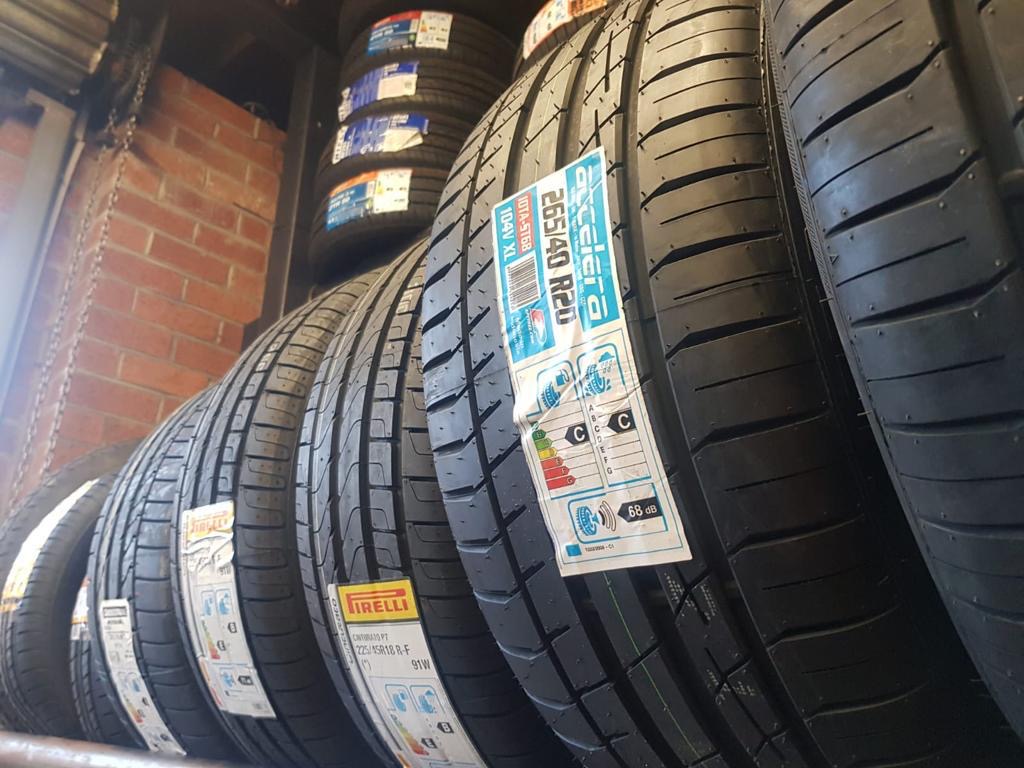
Your tyre size is moulded into the sidewall in this format: 205/55 R16 91V. Five numbers, two letters and a load/speed code. You'll also find it on the placard inside your driver's door jamb — that's the manufacturer-recommended spec.
If you can read both, you can verify any quote before it's fitted, spot a wrong-spec sale, and judge how old a tyre is from its DOT code. This guide walks through every number and what it actually means.
Where to look
There are two reliable places, and the placard wins.
- The driver's door jamb placard. Open the driver's door, look at the B-pillar or the door edge itself. There'll be a sticker showing tyre size(s) and cold inflation pressures, often with separate pressures for "normal" and "loaded" use. This is the manufacturer-approved spec — what your car was designed for.
- The tyre sidewall itself. Moulded into the rubber. This is what's actually on the car right now — which may or may not match the placard.
If those two don't agree, that's a flag — the previous owner or fitter may have changed the spec. It's not always wrong (different sizes can be approved alternatives) but it's worth checking with a fitter before you accept "we'll match what's on there".
Reading the size string — 205/55 R16 91V
Take 205/55 R16 91V as an example.
- 205 — section width in millimetres (the tyre's width across the tread, sidewall to sidewall, when fitted at correct pressure). 195, 215 and 225 are common neighbours.
- /55 — aspect ratio (sidewall height as a percentage of the width). Here 55 means the sidewall is 55% of 205mm, so ~112mm tall. A "low-profile" tyre is typically 40–50; a comfort tyre 60–70.
- R — radial construction. Almost every modern passenger tyre is R. You may also see "ZR" — that's a legacy speed-rating prefix on some performance tyres.
- 16 — rim diameter in inches (the wheel size, measured between the bead seats). 15, 17 and 18 are common neighbours.
- 91 — load index. 91 = 615 kg per tyre at max pressure. Higher number = higher load. Loadings are in a published table — your placard tells you the minimum.
- V — speed rating. V = 149 mph max. H = 130 mph, W = 168 mph, Y = 186 mph. Choose the rating on your placard or higher — never lower.
There may also be an XL or RF marking after the speed rating. XL ("Extra Load") and RF ("Reinforced") mean the tyre has a higher load capacity at higher pressure — common on heavier SUVs and EVs. If your car came with XL, replace with XL. EVs are especially fussy here because of battery weight.
Reading the DOT code (tyre age)
Look for a four-digit code stamped on the sidewall, usually inside a small oval, often preceded by DOT and some letters/numbers.
- First two digits: week of manufacture (1–52).
- Last two digits: year of manufacture.
So DOT XXXX YYYY 1224 means week 12 of 2024, i.e. late March 2024. The other letters/numbers in the DOT code are the plant code and product code — useful for recalls, not for age.
Why age matters: rubber ages whether the tyre's being used or not. Tyre industry guidance recommends inspection from 5 years and replacement by around 10 years from manufacture, regardless of tread depth. If a "new" tyre arrives with a DOT code older than 2 years, that's worth pushing back on. We always check the DOT before we fit.
Reading the EU label
Since May 2021 every new tyre sold in the EU and UK ships with an EU-format energy label, similar to a fridge. Three ratings on a single label:
- Fuel efficiency (A to E): rolling resistance. A is best — less drag, better mpg / EV range.
- Wet grip (A to E): how short the tyre stops on a wet road. A is best — shorter stopping distance.
- Exterior noise (decibels and a 1–3 wave icon): how loud the tyre is from outside the car.
There may also be icons for snow grip (3-peak mountain snowflake — proper winter rating) and ice grip (Nordic spec). These matter if you're choosing all-season or winter tyres.
The label is published by the manufacturer; it's regulatory information, not marketing. Worth a glance before committing.
Common gotchas
- "Same size, different load index." A 205/55 R16 88V will fit the same rim as a 205/55 R16 91V — but the 88 has lower load capacity. On a heavier car (estate, SUV, EV) the lower load index can be illegal and unsafe. Match the placard or go up, never down.
- Mixing speed ratings. UK law requires the same speed rating across an axle (pair). Different ratings front-vs-back is legal but discouraged. Mixed on one axle isn't.
- Run-flat with non-run-flat. Don't. The handling and emergency behaviour are different. If your car came on run-flats and you want to switch, that's a full-set conversation, not a one-tyre quote.
- Wrong size on the placard sticker. Rare, but happens after a previous owner upgraded wheels. If your sidewall and placard disagree, check the V5C / handbook and ask the fitter to verify.
Why this matters when you book a fitter
If you ring us with the size off the sidewall, we can quote accurately. If you give us the registration plate, we can usually look it up — but plate lookups occasionally pull the original-spec OE size that doesn't match what's actually on the car (after an upgrade). Sidewall reading wins. Photo of the sidewall on WhatsApp also works.
Whatever you give us, we'll cross-check against the door placard before we fit. That's not us being slow — it's the difference between a tyre that's right and one that's wrong.
Frequently Asked Questions
Can I fit a different brand on each axle?
Yes legally, as long as size, load index, speed rating and construction (radial) match across each axle. For best handling, matching across all four is preferable but not required.
Is a higher speed rating safer?
Higher speed rating tyres typically have stiffer sidewalls and better high-speed stability. The trade-off is sometimes a firmer ride. You can always go up from the placard rating; you cannot go down.
Where do I find the placard if my door doesn't have one?
Try the fuel-filler flap, the glovebox, or the inside of the boot lid. The handbook also lists the approved sizes. If you can't find it, ring us with your registration and we'll look it up.
Can you fit bigger wheels than my car came with?
Sometimes — depends on clearances, load rating, and whether the change is approved by the manufacturer. We won't fit something we're not confident is safe. Talk to us before you order custom wheels.
What about the EU label's wet-grip rating — is it worth the upgrade?
Yes. The difference between a wet-grip A and a wet-grip E tyre at 50 mph in the rain is around 18 metres of stopping distance. That's the length of a bus. If you do motorway miles or live somewhere wet (Bolton, Wigan, Manchester — looking at you), it's worth the upgrade.
Sources
- TyreSafe — reading the sidewall
- UK Government — tyre safety and the law
- UK Government — EU tyre label requirements
Written and reviewed by the Breakdown Man team. Last reviewed for accuracy on 2026-05-15.
Need a hand right now? Call 07549 676 220 for mobile tyre fitting across Bolton and Wigan. Quotes by phone — every job is different.

